The post Sunna, the conductor appeared first on Find Your Quest.
]]>Deprecated: YoastSEO_Vendor\League\OAuth2\Client\Provider\AbstractProvider::authorize(): Implicitly marking parameter $redirectHandler as nullable is deprecated, the explicit nullable type must be used instead in /home/u9c78kvn59j6/public_html/findyourquest.co.uk/wp-content/plugins/wordpress-seo/vendor_prefixed/league/oauth2-client/src/Provider/AbstractProvider.php on line 416
Deprecated: YoastSEO_Vendor\GuzzleHttp\Client::getConfig(): Implicitly marking parameter $option as nullable is deprecated, the explicit nullable type must be used instead in /home/u9c78kvn59j6/public_html/findyourquest.co.uk/wp-content/plugins/wordpress-seo/vendor_prefixed/guzzlehttp/guzzle/src/Client.php on line 181
Deprecated: YoastSEO_Vendor\GuzzleHttp\ClientInterface::getConfig(): Implicitly marking parameter $option as nullable is deprecated, the explicit nullable type must be used instead in /home/u9c78kvn59j6/public_html/findyourquest.co.uk/wp-content/plugins/wordpress-seo/vendor_prefixed/guzzlehttp/guzzle/src/ClientInterface.php on line 77
The Norse religion is within those who created a whole persona for the Sun, but for them the star was a goddess named Sunna. She was destined to ride across the skies until the end of time.
The ancient ones believed that everything had a reason to be or, many times, a personality of its own. It’s not hard to find personifications of chaos, earth, skies and other mightiness of nature.
Most often we find our forefathers giving name and appearance to the Sun, the most venerable star in our sky. It’s easy to understand why. In the majority of the European cultures, the simple presence of the Sun meant that it was time to sow, and with long and dark winters, time to venture outside without freezing to death.
The Germanic peoples are within those who created a face, name and stories for the Sun. Most uncommon, it was a goddess named Sunna or Sól.
There are no precise records on how she came to be or who she really was, the Poetic Edda says that Sunna and her brother Máni, the Moon, were born in the beginning of time and, not knowing what to do with their powers, received the task from the gods to wander in the skies in a certain way to establish the four seasons.
On the other hand, in the Prose Edda, they were fathered by a man called Mundilfari that found them so beautiful that he gave them the names of the Sól, after the Sun, and Máni, after the Moon. In this version, Sól married a man called Glenr (meaning opening in the clouds) and, because of her father’s arrogance in comparing her to the god’s creation, she was actually condemned to conduct the Sun.
The figure of Sunna is composed by a lady with golden curly hair that looks like rays of light.
She rides a chariot pulled by the horses Árvakr (Early Riser) and Alsviðr (Swift), carrying the Sun – which was made from sparks of Muspelheim, one of the 9 norse worlds – and with a shield called Svalinn, to protect the land from burning up completely.
It’s also known that Sunna and her brother are chased all the time by the sons of the gigantic wolf Fenrir – Skoll (Mockery) and Hati (Hate). At the end, during the apocalyptic events of Ragnarök, the beasts will finally reach their prey. Although it is the end for Sunna, her daughter will continue her legacy.
Sunna was praised for many reasons and associated with the power of healing, both the land and the people. For Midgard, Sól brings the spring making the trees, grass and flowers come back to life, also it is when the rivers unfreeze and it’s time to plant once more. Basically, it’s time to be reborn and rise back to life.
To the people, having the sunlight back was a sign that the hard times are gone and that they could finally be back to work the earth, time for a little happiness and a break of the hardness of the dark and cold months that have passed, to rejoice for a second before it goes all dark again.
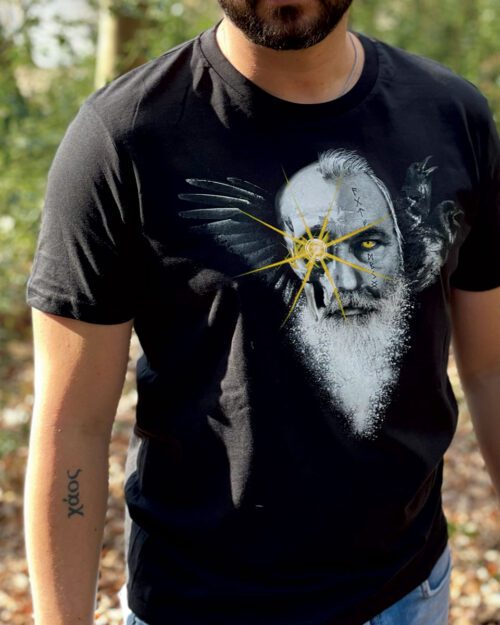
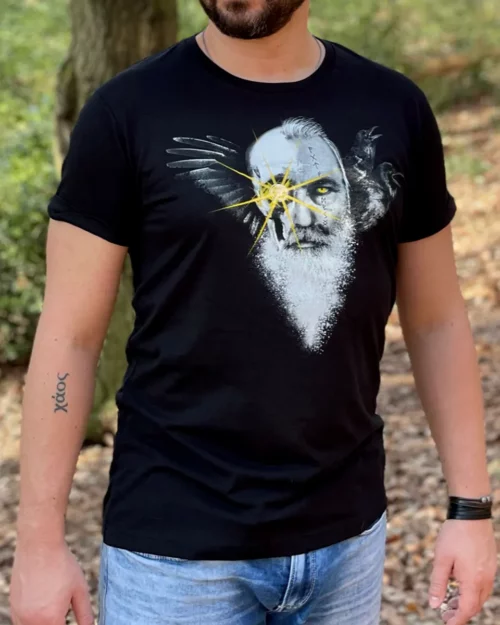
If you liked this post, these products might interest you. Don’t forget to visit our Shop.
The post Sunna, the conductor appeared first on Find Your Quest.
]]>The post Odin, the one-eyed hanged man appeared first on Find Your Quest.
]]>What would you do to become the wisest creature in the universe? Have you ever wondered why Odin is missing one of his eyes? What Happened? A fight? A battle? Not at all. Know more about Odin’s sacrifices
We all have heard of many stories about the search for knowledge, but none of them is as strong and violent as Odin’s quest for wisdom.
It is known that, more than anything else in the cosmos, Odin craved wisdom. In his quest, he has searched throughout all the 9 worlds and risked anything to achieve his goal.
Sources tell us about the time he travelled to the roots of the World Tree, Yggdrasil. His plan was simple: find the Mimir and drink from his well.
Mímir was one of the wisest beings in the universe and got his knowledge from his well, Mímisbrunnr, located at the bottom of Yggdrasil. It is said that Mímisbrunnr, was one of the 3 wells located in the roots of the gigantic tree and that it had the property to store all the knowledge of the creation also passing it on to those who drink from it.

The problem was that Mímir would not give anything from the precious well without asking for something in return at a high price. When Odin arrived and asked to drink from it, Mímir was unconditional:
— If it is knowledge you seek, you, Allfather, like anybody else will also need to pay the price! I shall have one of your eyes in exchange for a sip.
As said before, this was a problem, but not for Odin, the almighty king of the Asgardians. Without hesitation, the god scooped his eye from his face and gave it to the well.
Then, the deal was sealed. Mímir dipped the god’s horn in the well and gave away the draught. This was his first sacrifice.
In future passages, he found the decapitated head of Mímir and embalmed it with herbs and charms, keeping it with him almost all the time in case he needed advice.
The Allfather’s ultimate sacrifice
In another passage, the bards tell the stories of his second sacrifice. This time, even harsher.
Odin caught himself many times watching the work of the Norns. The Norns were beings that controlled the destiny of all mortals and gods. As they decided the fate of everyone, they carved runes on the trunk of Yggdrasil.
They were the only ones that could read them, as the runes were only revealed to those who were worthy. And the unstoppable Odin knew that.
One day he decided it was time to acquire this new knowledge, but, to do that, he needed the ultimate sacrifice. Before acting, he forbade the other gods to help him, not even a sip of water or fruit would touch his lips.
He decided to hang himself and that he should stay there until the task was done.
He threw a rope around one of the branches of Yggdrasil and wrapped around his neck. Then he jumped. That was not enough. To make sure the sacrifice was true, Odin took his spear Gungnir and pierced himself.
For 9 days and 9 nights, he was there, not dead and not alive, calling for the runes. He only stopped when he sensed something different, something taking shape. The runes accepted his tribute. Reborn and victorious, the god´s cry of joy could be heard in all the cosmos.
“I am worthy! I have the knowledge!”
If you liked this post, these products might interest you. Don’t forget to visit our Shop.
The post Odin, the one-eyed hanged man appeared first on Find Your Quest.
]]>